Showing posts with label political narratives. Show all posts

Thursday, 24 November 2011

Narrativewatch: NZ Labour Party turns Grimond's law on its head

195755_177063955675166_5662347_n
According to legend, Jo Grimond, leader of the British Liberal Party from 1956 to 1967, once said there were really only three campaign themes.  The opposition always said it was “time for a change”.  The government always replied, “give us more time”.  The third party was left inviting voters to cast “a plague on both your houses” – a protest vote.

 Sure enough, in the run up to New Zealand’s general election, to be held this Saturday, National, the lead party in the governing centre-right coalition, has used a “more of the same” narrative,  in a soft-focus, reassuring kind of campaign. 

But Grimond led his party a generation ago, in an era of two party politics, under first past the post voting.  New Zealand in 2011 is political light years away from his political world.  One basic difference: my home country uses the mixed member proportional (MMP) voting system.  The opposition Labour Party, who started the campaign as much as 20 points behind in the opinion polls, have defied Grimond’s maxim.  Their campaign has told many stories, but none of them is really about change.

Take their widely praised campaign opening broadcast.  The 20 minute documentary style video re-told the party’s myths, using black and white archive footage to highlight Labour’s beginnings on the West Coast and the achievements of the first Labour government.   Free milk in schools, free healthcare, thousands of state home . . . it was all there.  (Hey, I was raised on these stories!)  The grainy images were a series of cues designed to spark myths (stories) in the minds of the audience.  The video was a political version what Annette Simmons calls “values in action” stories.  A record is so much powerful than rhetoric.

Labour politicians set out to embody the party’s narrative about itself.  Party leader Phil Goff and his 87 year old father Bruce tell the story of how, after the death of Goff's grandfather, a boost in the widow's pension helped the family to survive.

Other Labour MPs told personal, “who I am” stories.  Damien O’Connor is well anchored in the West Coast Labour tradition. Jacinda Ardern took us on a drive through her home town of Murupara, a shadow of its former self after the big economic gales of the 1980s and 1990s.(I wonder if someone in Labour’s advertising agency has watched John Major’s famous 1992 drive through Brixton?)  And Stuart Nash is the grandson of former Labour prime minister and icon Sir Walter Nash.

But  there were no “vision” stories.  The video canvassed Labour's plans for a capital gains tax, tax free first $5000 of income, and retaining state owned assets, but on the whole it was policy light.

This is, after all, a party that does not seriously expect to win the election.  Labour has been in the polling doldrums since they lost office in 2008.  Earlier this week, Roy Morgan found that 49.5% of voters said that New Zealand was heading in the right direction and 31% said it’s heading in the wrong direction.

Even if there is little appetite for change, Labour wants to be a credible contender in 2014.  This time, the best way to avoid a wipeout is to shore up and bring out the core vote. Hence the invocation of the party’s myths and legends.

Labour has plenty of policies.  They have promised to raise the pension age and to make KiwiSaver compulsory. These are bold and, in many ways, risky stances, but then the party had nothing to lose.  And remember, “attracting attention” is the first of Stephen Denning’s key steps for inspiring action.

Labour has not been able to move on to Denning’s next two steps – “stimulate desire for change” and “back it up it with reasons”. Before making the case for the Labour alternative, they needed to tell voters why the National-led government should be sent packing after just one term.  The ad attacking National’s economic record contain some killer stats – but they are lists, not stories, and are less memorable as a result.   (For a devastatingly effective “case for change” advert from New Zealand’s political history, click here.)   Moreover, the tea tape argument – what did National Party PM John Key really say, and why wouldn’t he release the tape – dominated the penultimate weak of the campaign and deprived Labour of media oxygen.

In the final week, with its poll ratings hardly moving, Labour has gone back to its on-going theme – “stop asset sales” - and tried to turn the election into a referendum on National’s unpopular plan to partly privatise four state-owned energy companies and Air New Zealand.  That sounds to me like an appeal to cast a protest vote.   Labour’s closing broadcast is really another list of policies. And what's with the academic telling everyone how to think?

I'll finish with a brief comment about the Greens, the third party. At the general elections since 1999, between six and nine Green Party MPs have been returned, but they have always sat on the opposition benches.  This time, however, the Greens seek greater influence in the new parliament, using a smart new campaign pitch that promises "jobs that work for our environment, our economy and our people  . . . for a richer New Zealand”.  You’ve got it: it's a positive narrative, about change, rather than a "plague on both your houses".


Posted via email from Neil Stockley's posterous

Monday, 14 November 2011

Pollwatch: David Cameron's "blame Europe" strategy - a quick postscript

Media_httpwwwnoiseoft_afcmb

Leo Barasi has provided some useful context for the Cameron-Osborne "blame Europe" narrative on the economy. Their "blame Labour for the cuts" narrative still has some way to go. But half the country now holds the coalition responsible for the cuts, at least in part. Time for a new story . . .

Posted via email from Neil Stockley's posterous

Friday, 11 November 2011

Narrativewatch: David Cameron's 'blame Europe' strategy

In the second third of this parliament, the one now beginning, and whose opening will be marked by Osborne's autumn economic statement on 29 November, Britain's economic woes will be laid rather less at Labour's door and rather more at that of the eurozone. That's why Cameron and Osborne are now constructing a very obvious narrative of continental European failure, from which Britain is thankfully (as they depict it) exempt, but which nevertheless continues to put the UK economy at risk. 
In some ways, blaming Europe is not as easy as blaming Labour. Labour is a stationary target, and both coalition parties can unite in dumping on it. Europe, by contrast, is a moving target that divides the coalition parties and emphasises their differences. But the political beauty for the Conservatives of blaming Europe is big. It goes down well with Tory activists. It allows Cameron and Osborne to frame their engagement with the EU as candid friends and it chimes with public opinion. And in particular it provides a ready-made and not entirely specious excuse for the failure of the government's economic strategy in the first third of the parliament.

In today's Guardian, Martin Kettle has a very perceptive article about the Cameron-Osborne narrative that "Europe is to blame" for Britain's economic woes.

Kettle's analysis picks up on the main purposes of political narratives. He brings out how they work.

First, narratives provide an account and an explanation for current problems, complete with heroes and, more importantly, fall guys and villains.

Second, they enable listeners to frame options for the future and work out what they need to do next -- in this case, to keep giving the coalition, or more importantly, the Conservative component, the benefit of the doubt.

"Blame Europe" has many of the properties of a successful narrative. It's easy to grasp and not completely implausible. And it plays to an emotional reflex that is very familiar to a large section - almost certainly a majority - of the British public.

Labour and the Liberal Democrats will have a hard time grappling with this narrative. Labour's best bet will be to pin the blame for Britain's economic problems on Cameron and Osborne and to argue that they have not kept us out of the Eurozone crisis.

Nick Clegg will have little choice but to blame the former Labour government -- unless he wants to recast his party's storylines about the EU. But will the public have moved on by 2015?

Monday, 7 November 2011

Narrativewatch: NZ National Party promises more of the same

 As New Zealand’s general election campaign rolls into its second week, John Pagani argues that the following comment by the National Party prime minister, John Key, sums up what the choice is all about.
Mr Key says don't expect a change in style from a second-term National government, should he win a second term.
''I think in a lot of ways it will have a very similar look and feel to it...."
John Pagani says:
It's a consistent message for a conservative party.
He then makes a more telling point, through gritted teeth I am sure:
The right track/wrong track polls all say most people think the country is on roughly the right path. So, it's going fabulously well, vote John Key and National for more of the same. 
That's a neat summary of how a governing party’s election narrative works, whether they are of the moderate right or the moderate left.  “Re-elect us, and we’ll finish the job”, the government says.  Translation: give us a fresh mandate, so that we can keep on doing the good things that you like, providing strong and competent government.  More of the same. Don’t risk a change.
National’s first campaign spot is exhibit A.  Here are the words:
Despite one of the toughest periods in New Zealand’s history we’re starting to see the promising signs of recovery. Make no mistake, this year we have a very clear choice to make. John Key and National: building a brighter future.
Notice though how the pictures add an edgier sub-message: a contrast between the National-led government with the “risk” presented by the main opposition party (Labour), who are miles behind in the opinion polls.  (For a good analysis of the images used and the text’s emphasis on “John Key and National”, click here).  And, after all, it’s barely three years since Kiwi voters sent a long serving Labour government packing.
As John Pagani suggests, this sort of narrative works when most voters are basically happy with the state of the country and with the government’s performance and are not inclined to try the main alternative.
Voters are much more likely to give an incumbent government “another go” after one term than when they have been around a bit longer.  Tony Blair’s re-election in 2001 was a good example.  So was Helen Clark’s successful 2002 bid for a second term. 
They both found seeking a third mandate a much trickier proposition. Both Blair and Clark (just) made it over the line in 2005 and in so doing, showed that the quest for a third term separates the strategists from the dilettantes, the political storytellers from the followers of old playbooks and, let’s be honest, the deserving from the undeserving.  “Don’t throw it all away” will fall on deaf ears when most voters are tiring of the government, especially if the opposition has started to regain some credibility. 
The governing party usually offers new policies that are more popular than the alternatives on offer.  Helen Clark’s promise in 2005 to scrap interest rates on loans for full time and low income students was one example.  They should also be bolder and more robust.  Sir Robert Muldoon’s “Think Big” energy programme back in 1981 enabled him to win the jobs argument but ended in disaster – after he had secured a third term.
OK, I’m getting ahead of the current New Zealand situation.  For now, it looks as if Key will win, and, just maybe, with an overall majority, by using a “more of the same” narrative, which is itself embodied by a safe and risk-free, if not dull, campaign. 
So, where does that leave Labour?  Pagani says:
Oppositions represent change.
He’s right about that.  The main opposition party usually tells voters that “it’s time for a change”.   But that’s not quite the story Labour is telling this time.  More on that soon.

Monday, 31 October 2011

Narrativewatch: Paul Keating's "higher calling"

The former Australian prime minister, Paul Keating, recently gave a must-read newspaper interview.  There were many interesting insights, but the media picked up on his observation that Australia’s current Labor government lacks a narrative.
"The failure of the Rudd and Gillard administrations is the lack of an over-arching story, the lack of a compelling story . . .
"I'm happy that Labor took us through this dreadful financial crisis so competently. But they are not in the business of teaching. And governments, to succeed with change, must be in the business of educating the community.
"Our Labor governments have failed to conceptualise the changes. We need a framework . . . “
He went on:
"I think the Australian people are very conscientious. During the 1980s and 1990s we proved they will respond conscientiously to necessary reforms. They mightn't like them but they'll accept them. But reforms have to be presented in a digestible format.
"I know that in the age of the internet, opinion and perpetual static it is difficult to get the message over. I accept that. But the big messages have their own momentum. If we get the story of transition right then other things will find their place."
I agree with Keating on where the Gillard government is going wrong.  But I was more interested in his take on the most basic argument about the essence of political communications.  More than that, he discussed the purpose of leadership in democratic societies. 
Should leaders act in accordance with their core values and try to shift public attitudes, in support of big changes and hard choices?  Or should they follow the basic contours of public opinion and avoid unpopular and difficult decisions?  Leaders taking the latter course may give themselves a better chance of staying in power and, just possibly, strengthening their ability to “do the right thing” in the longer term.
Keating’s answer was as romantic as it was unambiguous:
"You need a higher calling or some inner system of belief - here I mention Kant and the inner command that tells you what is true, what is right, what is good. The inner command must be the divining construct in what you do.”
And:
“In the end, everyone in political life gets carried out - the only relevant question is whether the pallbearers will be crying."
I am a long time admirer of Paul Keating and the verve with which he approaches politics.   I agree with him that politics should be about big ideas and grand visions, rather than simply following fads and focus groups.  Political leaders should have core beliefs, deep passions and big agendas. 
But what Keating calls the “higher calling” or, in other times, the “big picture”, is not necessarily the same thing as the “narrative”.  I see the “narrative” as the means by which leaders market themselves and seek electoral popularity.  Having gained power, democratic leaders use narratives in order to persuade people to follow them in a particular direction; more likely, to accept change.
Both types of narrative must be a story, with people, events and something unanticipated.  They must also evoke an emotional reaction in their audiences.
In his seminal book Leading Minds, Howard Gardner studied a number of successful leaders from a range of fields. He concluded: 
“A leader must have a central story or message.  The story is more likely to be effective in a large and heterogenous group if it can speak directly to the untutored mind – the mind that develops naturally in the early lives of children with the need for formal tutelage.  Stories ought to address the sense of individual and group identity, the “we” and the “they” thought that sense may actually be expanded or restricted by the story.  They should not only provide background, but should help group members to frame future options.”  (1)
Later, he observed:
“Leaders benefit from the ability to build on stories that are already known – for example, those drawn from religion or history or those that have already been circulated within an institution – and to synthesise them in new ways, as Martin Luther King Jr was able to do.” (2)
Gardner also argued that there would be tensions between inclusionary and exclusionary stories.  He stressed that leaders must embody their narratives to maximise the chances of success.  Recall, for instance, Churchill’s refusal to leave London during World War II.
I have argued previously that, whist all politicians and parties have narratives, they can exercise only limited control over them, a point that Keating acknowledges, above.  Moreover, politicians are most successful when they speak to the stories that are in the minds  of their target electorates – the public’s core values, Gardner’s “stories that are already known” – as well as their current anxieties and concerns about the future.  [For some examples, click here and here.]

At the same time, a successful narrative must be based firmly on a clear, coherent set of ideas. Michael Deaver once said that one of the biggest lessons he learned from working with Ronald Reagan was that:
“You've got to know who you are before you can communicate it.”
Keating’s political career, with its spectacular highs and lows, demonstrated all of these points.   He never wanted for visions and higher callings and, with Bob Hawke, sold difficult economic changes to the Australian public by levelling with people, getting out and selling their policies and, yes, telling stories.
Hawke was an effective prime minister who projected himself as a national leader, an embodiment of Australianness.  But Keating was the master of personal persuasion, using anecdotes and easy-to-understand illustrations, to show people the merits of policy changes.
In 1992, Keating, now prime minister, developed the theme of Australian national identity with his landmark Redfern Park speech on Aboriginal reconciliation.  The following year, he delivered his moving eulogy for the unknown Australian soldier.
Through all those years, he showed how “romantic” political narratives and those more concerned with political marketing can work in tandem, and how they work against and supersede one another.
And, lest we forget, Keating’s government was decisively defeated in 1996.  He had been around too long, and seemed out of touch and remote from public concerns.  The Australian electorate lost interest in his “big picture” and Keating’s narrative was no longer theirs. 
Still, I’d prefer that kind of finish to a leadership with no vision at all.
(1)    Howard Gardner, Leading Minds (Harper Collins, 1995) p 290
(2)   p.291

Thursday, 6 October 2011

Narrativewatch: David Cameron, Winston Churchill and the bulldog

David Cameron’s speech to the Conservative Party conference has had a mixed reception from political commentators.

I thought the most interesting bit came at the very end of the speech.

We can be a country where people look back on their life and say: I've worked hard, I've raised a family, I'm part of a community and all along it was worth my while. We're too far away from that today but we can get there. 

It's not complicated, but not easy either - because nothing worthwhile is easily won. But you know, we've been told we were finished before. 

They said when we lost an Empire that we couldn't find a role. But we found a role, took on communism and helped bring down the Berlin Wall.

They called our economy the sick man of Europe. But we came back and turned this country into a beacon of enterprise.

No, Britain never had the biggest population, the largest land mass, the richest resources, but we had the spirit. Remember: it's not the size of the dog in the fight - it's the size of the fight in the dog. Overcoming challenge, confounding the sceptics, reinventing ourselves, this is what we do. It's called leadership.

James Kirkup of the Daily Telegraph quickly saw what kind of story the PM was pitching.

I don’t think you have to be a historian to get the impression that Mr Cameron would like you to think about British bulldogs, Sir Winston Churchill and the war.

. . . . Mr Cameron is pitching himself as the man to lead us into the battle to come.  Quietly, he’s recasting himself, changing his role from sunshine kid to economic war leader.

As James Kirkup suggests, that’s quite a hard transition to make.

What’s more, in starting to tell a Churchillian narrative, David Cameron has taken on a big challenge.

Let’s recall the basic elements of Churchill’s wartime narrative.  In his new book, All Hell Let Loose: the World at War (1939-45), Max Hastings says:

It is hard to imagine that Britain would have continued to defy Hitler after June 1940 in the absence of Winston Churchill, who constructed a brilliant and narrowly plausible narrative for the British people, first about what they might do, and later to persuade them of what they have done.

Harking back to the Spanish Armada and invoking the myth of the “strong island nation”, Churchill declared that “we shall never surrender . . . we will fight them on the beaches”.  The goal – “victory at all costs” - was never in doubt and nearly everyone had a part to play in the war effort.  By contrast, beyond getting rid of the public deficit, David Cameron’s strategy for winning the economic war and building a strong economy, is much harder to pin down

In 1940, Churchill could rally the British public and tell them “what they might do” because it always obvious who the enemy was – a real nation with a powerful military force and a demonic leader.  In 2011, it is not so clear who or what Mr Cameron wants to lead Britain and prevail against.

All through World War II, Winston Churchill told another, parallel story – that of the strong and purposeful community, fighting together, making equal sacrifices and winning together.  According to the latest data from Ipsos MORI, seven voters in ten perceive that the coalition government’s plans to reduce the national deficit will hit poor people hardest.  People don’t think that “we’re all in this together”.  The “strong community” archetype does not look like one that David Cameron can easily deploy.

None of this means that David Cameron should give up on trying to be an economic war leader.  He and his colleague may yet devise a strategy that the public can rally behind. In any case, fast-moving events could leave them with little choice.  For now, however, these words from the PM’s closing proration may be the most instructive:

Overcoming challenge, confounding the sceptics, reinventing ourselves, this is what we do. It's called leadership

David Cameron will find that he has more personal credibility on these counts than by trying to call Churchill, Henry V and the bulldog into action.  He could re-tell and apply the stories from his own political life to illustrate what his type of leadership is about.  In this respect, Cameron could take after Churchill who, lest we forget, embodied his own narrative by staying in London during the blitz, thereby exposing himself to the risk of physical danger. 


Posted via email from Neil Stockley's posterous

Wednesday, 5 October 2011

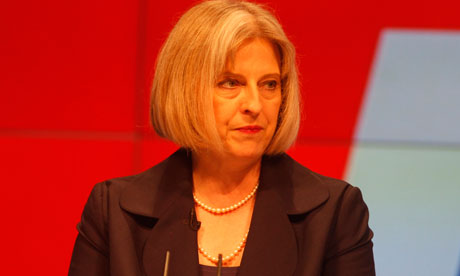
Narrativewatch: learning from Theresa May and the cat

"Facts tell, but stories sell . . . If you're not communicating in stories, you're not communicating.”

James Carville and Paul Begala, US political consultants

Theresa May should know better than to believe reports about the human rights implications of cats

Politicians like to tell stories.  Anecdotes turn abstract concepts and political arguments into credible situations and events that people can understand quickly.  Anecdotes work best when they’re about people.  People relate and react to other people, their highs and lows, their triumphs and their tragedies, their achievements and their failings.  When people act, or when things happen to them, we can feel love, hate, joy, happiness, sadness, pity, longing or resentment. 

In politics, strong anecdotes prove points and prop up prejudices.  So, Ronald Reagan, the master storyteller, told Americans about the scandal of the “welfare queen” from Chicago’s south side.  He told stories about farmers, preachers, people living in small-town America and, as Dan Rather has written, the payoff usually carried a political wallop.  Reagan also told the story of the WWII bomber pilot on a doomed plane who refused to parachute because a wounded young gunner couldn’t evacuate.  OK, the last one came from an old war movie, but Reagan kept on telling it anyway.

Less memorably, Tony Blair sometimes peppered his party conference speeches with brief, oblique anecdotes to show that his government was delivering.

Which brings us to yesterday’s speech to the Conservative Party conference by Theresa May, the home secretary.  She provided an excruciating example of how anecdotes can go badly wrong in politics.   To illustrate the supposed lunacies of the Human Rights Act, a bête noire of Conservative conference goers, Mrs May cited the example of:

"the illegal immigrant who cannot be deported because—and I am not making this up—he had a pet cat."

The trouble was, she had her facts wrong.  The justice secretary, Ken Clarke, all but disowned her claim, in public and on camera.  Then, a spokesman for the judiciary said that the case she referred to involved a Bolivian man whose appeal against deportation was based on a relationship with a British woman of some years' standing. As part of his evidence to a court, he cited his joint ownership of a cat, to demonstrate the seriousness of the relationship.   The basis for the home secretary’s comment appears to have been an immigration judge's light-hearted remark about a cat no longer having to fear adapting to Bolivian mice, which was quickly seized on by right-wing newspapers.

The liberal media has hardly been able to contain its glee, especially as daily coverage of the conference rapidly became dominated by the May – Clarke, er, “catfight”.  [Click here, here, here, here and here.]

The Guardian went in for the kill:

It was an undignified episode. Doubtless some lowly speechwriter has already been handed a glass of whisky and a loaded revolver for embarrassing the home secretary. But it is Mrs May's misjudgement that matters in the end. At the very least, the woman who once bravely coined that phrase about "the nasty party" ought to learn her own lesson. She should be confronting her party's prejudices, not flattering them.

Political differences aside, I suggest there is another, simpler lesson for all politicians and their speechwriters – don’t ever rely on anecdotes unless you can be absolutely certain they are 100% fireproof. 

Ronald Reagan got away with his story about the fictitious fighter pilot, but he lived in a different political culture, in a different time, and had established a conspiracy of fiction with his constituencies.  The UK’s trip- them-up media culture won’t allow top politicians any such leeway. But then, the powerful and those who aspire to lead us should be held to account for the claims they make.

Remember how, in 2000, Gordon Brown, the then chancellor, used Oxford University’s decision to exclude Laura Spence to highlight the bias in the university system against working-class applicants.  He was soon shown not to have been in full possession of the facts.  Later, successive Conservative leaders, Iain Duncan Smith and Michael Howard, both made claims that specific people had been poorly treated by the NHS, only to see the stories fall apart. 

And, right back in 1992, Labour’s general election campaign became bogged down in the war of Jennifer’s Ear -- though that argument was also about the ethics of involving a (named) young girl in a political campaign.

Mrs May is not the first politician to be discover the downside of a faulty anecdote.  I’m sure she won’t be the last.


Posted via email from Neil Stockley's posterous

Narrativewatch: the coalition government tries to woo women


Today, The Guardian’s astute political correspondent, Allegra Stratton, has an interesting article about the coalition’s new attempts to reposition itself with women voters.  The need is clear.  Last month, an Ipsos MORI poll found that men were more dissatisfied than satisfied with the government, by a margin of 21%.  Among women, the figure was 33%. 

But what to do about it?  Allegra Stratton picks up on the distinction between a narrative based mostly on ‘values’ and one based more on ‘policy’ and suggests that the government wants to try a bit of both, but without backtracking on the debt reduction strategy – the heart of its programme.

[There] will be a process of reintroducing the PM to women. In Downing Street they like a story about Bill Clinton reaching out to soccer moms – in this case he banned tobacco advertising next to schools. Tobacco advertising is already banned in the UK but you get the point. One option here is to ban cynical advertising aggressively targeted at children.

Watch out for these and other issues: expect Cameron to criminalise forced marriages sometime soon. That's also why you will hear the prime minister close the conference by talking about something his coalition partners, the Lib Dems, opened their conference with: that gay couples would be able to marry, not just enter civil partnerships. Cameron will remind the country why the policy is important to him, and what social mores are important to him.

Some of his own female MPs think this doesn't cut the mustard and hanker for more substantial overtures. No 10 aides will point out that the theme of the autumn – a clampdown on the something for nothing culture – is something women want. They caution that the debate about scrapping the 50p tax rate must also be seen in the light of how it will play with women – again, badly. "It matters to women that the top 10% are paying a heavy chunk of tax. We have to really underline 'we're all in it together'," one adviser said.

There’s more.  Opinion polls show that women are more downbeat than men about the economy and  focus groups suggest that they are more likely to be worried about cuts in government spending.  The government’s problems with women are more fundamental than the strategists seem to acknowledge.  (For further analysis and comment, click here and here.  But note also this backgrounder from Ipsos MORI.)

Allegra Stratton concludes:

The great face-off between Cameron and women is uncharted politics: a strategy testing heavily the personality and personality of the prime minister himself.

I’d go even further than that.  The government is trying to ‘change the subject’ with women, and invite them to look past its core narrative, that above all, the deficit must be all but wiped out during the life of this parliament. 

I doubt that any government in modern times has pulled off such a political feat.  If his emerging "gender gap" strategy succeeds, David Cameron will be one of the greatest political communicators this country has ever seen.  The coalition’s efforts to woo back women voters provide a narrative case study that is going to be well worth watching.


Posted via email from Neil Stockley's posterous

Wednesday, 28 September 2011

Ed Miliband's narrative failure

Labour leader Ed Miliband delivers his speech

Every year, the media and the political class get themselves well and truly worked up about party leaders’ conference speeches.

They seem to forget that most voters hardly notice these performances. The party activists have almost always forgotten them by the time they get home. There are usually sound reasons why this is so.

Still, a leader’s conference speech provides the scribes with a quick and easy barometer of how well a party leader is performing. With luck, they and the activists will pick up some clear signposts as to where the leader wants to take the party next. More likely, the speeches typify how badly a leader is performing. Remember Iain Duncan Smith’s cringe-making declaration to the 2003 Conservative conference that “the quiet man is turning up the volume”.

Yesterday’s speech by Ed Miliband mattered, because he desperately needed to define his vision for the Labour Party and for Britain and, with dismal personal poll ratings, to present himself as a credible prime minister. The consensus in today’s media is that, not to put too fine a point on it, the speech was a dog. (See, for instance, Paul Waugh of PoliticsHome, Andrew Gimson in the Daily Telegraph, and Michael White in The Guardian.)

Some of the commentary is too harsh. Yesterday, Ed Miliband explained how he will try to reposition Labour. He sided with the "wealth creators" against the "asset strippers". There was a good, Clintonesque pitch to the “squeezed middle” -- "the people who don't make a fuss, who don't hack phones, loot shops, fiddle their expenses or earn telephone number salaries at the banks". Ed Miliband spoke of a tough, new stance on public spending. And it was back to Beveridge – yes, what Beveridge actually said- with talk of rewarding responsible people who work hard and contribute to society with higher housing priority and better benefit entitlements.

But there was no narrative. (If you want to know how I define a political narrative, and why I think it matters, click here, and here.) Ed Miliband says he knows what he wants – an end to the “something for nothing society” and a new type of social democratic prospectus. His ambitious speech tried to map out a long term project, to remake Britain’s economy, along continental “social market” lines.

The Economist’s Bagehot columnist says:

Well, those bold ideas were in the speech, if you knew to listen for them. But somewhere along the line, Mr Miliband seems to have lost the will to explain what he was up to, out loud and in full. . .

And:

These are bold ideas [on industry policy and taxes and dividends], and it would have been helpful if Mr Miliband could have spelled out more clearly what he really intends to do . . .

. . . There were a host of other areas in which Mr Miliband started to say something clear and bold, only to dive for the safety of waffle.

He’s quite correct. Much of the content was very tentative, and the Labour leader shied away from making specific ideas and proposals, and from telling stories about how they would work for people. You can’t have a story without an ending and in political narratives, the people listening want the ending to be a happy one. Ed Miliband showed yesterday that political marketing is not as divorced from belief-systems and policies and it may sometimes seem.

The second, admittedly more tentative, explanation for the speech’s failure concerns political values. Bagehot makes another interesting observation:

. . . Mr Miliband's speech was intended to hold up a mirror to the British public, and explain to them how their own existing values were his values. [This] sounded like a belief that the centre-ground of British politics had shifted towards Mr Miliband, merely described a different way.

The result was a lot of painful straddling . . .

. . . This was a left wing speech, in many ways, but sounded like a right wing speech a surprising amount of the time.

I have argued many times that politicians’ narratives only work when they speak clearly to the values of the people they are trying to convince. Bill Clinton’s much misunderstood “triangulation” is a good example. Bagehot may be right about Ed Miliband’s assumption, but the centre ground may not have shifted in quite the way that the Labour leader may think. That’s a discussion for another day.

There’s a more immediate challenge for the Labour leader. Ed Miliband didn’t sound completely confident yesterday about whose values he was speaking to - the values of the people in the hall, or those of the people watching tv at home. The end result was a sense of fuzziness, something a “defining narrative” can never suffer from.

The way Ed Miliband sounds, and the voters’ sense of him, brings us to the third and most brutal explanation of why his attempt at presenting a narrative didn’t come off. The public and the media simply don’t take him seriously. Last week saw the release of new research commissioned by the former Tory party treasurer Lord Ashcroft. The words focus groups used to describe David Cameron were "determined", "competent" and "ruthless". The word they volunteered for Ed Miliband was "weird".

In today’s Guardian, Jonathan Freedland says:

Put simply, my fear is that you can make all the speeches and policy statements you like – carefully devising a strategy on this and crafting a narrative on that – but what matters more are shallow considerations of looks, demeanour, speech patterns and biography. That, in short, it is personality, not policy, that counts . . .

. . . [This] is the problem for Ed Miliband. He is a decent, clever man but he does not look the part. He looks too young; he looks more like the speechwriter than the speechgiver, an adviser to the leader rather than the leader. That could change; he might grow into the role over the next three-and-a-half years.

Ed Miliband may know what he stands for, what he wants to do. But the counter-story about him is much, much more powerful and keeps on overwhelming the Labour leader's halting attempts to explain who is and what he is about. And, although Jonathan Freedland wants to cling on to hope, the counter story shows no sign of changing.

Posted via email from Neil Stockley's posterous

Saturday, 17 September 2011

"Competence with a conscience" - how well is Nick Clegg's narrative working?

“Competence with a conscience” sounds like a good, comfortable narrative for the Liberal Democrats.  But the voters don’t seem to be buying it.


Nick Clegg’s narrative to market the Liberal Democrats and our role in government was summed up in his speech at the National Liberal Club in May. The speech marked the first anniversary of the coalition’s formation.


At the next election, we will say that we are demonstrably more credible on the economy than Labour, and more committed at heart to fairness than the Conservatives. I am confident that by showing we can combine economic soundness with social justice – competence with a conscience – we will be an even more formidable political force in the future.


These themes are elucidated in Nick’s foreword to the Facing the Future paper, to be considered by the party conference this week.


For the conference season, Populus has produced its latest findings on how the parties are perceived by voters.  The results aren’t exactly encouraging for the Liberal Democrats. A useful summary comes from Anthony Wells of UK Polling Report:


Historically these Populus questions tended to show that the Lib Dems had the positive party image. That is no longer the case. They have the least positive score on every measure except being for ordinary people [with 45% agreeing it applies to the Lib Dems], where they at least beat the Tories [with 30% agreeing].


This is very important – and very worrying.  In the run-up to the last general election, the image of “being for ordinary people not the best off” was, with a reputation for being honest, one of the party’s most positive brand assets.


We have often heard the argument that being in coalition would make the party more credible to voters.  Once they saw us delivering in government and taking the hard decisions, voters would take the Liberal Democrats more seriously  – the “competence” part of Nick’s desired brand.  But Anthony Wells explains:


On having a good team of leaders [the [Lib Dems] are on 31% (down 13 since last year), on sharing peoples’ values they are on 36% (down 5), on being honest they are at 35% (down 6), on competence they are at 31% (down 10), on party united they are at 27% (down 13), on having clear ideas they are at 31% (down 11). In most cases the party’s ratings had already dropped sharply last year following their decision to enter the coalition – these falls are on top of that.


Then, Wells rams the point home:


In summary, go back a couple of years and people tended to give the Lib Dems the benefit of the doubt, there was a tendency for people to assume they were good, honest and caring people (even if other polls also suggested people rather doubted their policies would work or they had any chance of actually winning). That positive party image took a knock after the removal of Charles Kennedy, but was on its way to recovery by 2009. Since then it has fallen through the floor.


Posted via email from Neil Stockley's posterous

Sunday, 4 September 2011

The comeback cop: Brian Paddick's ground-breaking mea culpa story

Congratulations to Brian Paddick, who will be the Liberal Democrat candidate for London mayor in 2012. He is being re-used as a candidate, despite his poor campaign in 2008, when Paddick’s slogan, “a policeman, not a politician”, turned out to be all too true.

Now, in winning the Lib Dem nomination, Paddick has performed an epic feat in political storytelling. Announcing his candidacy back in June, Paddick gave us this carefully crafted mea culpa:

The 2008 campaign was a bitter and bruising experience. I had just left the police over the shooting by armed officers of the innocent Brazilian, Jean Charles de Menezes at Stockwell. It was a case of ‘out of the frying pan and into the fire’. I was an uptight, politically naïve ex-police officer with no experience of party campaigning or working with activists. I got a lot wrong.

The campaign slogan then was ‘Serious about London’ . . . but I was far too serious about everything. I was terrified of Punch and Judy, of Paxman and Sopel and I had unrealistic expectations of what to expect from the party. I was, quite frankly, a bit of a pain! Towards the end, particularly in the televised debates with Comedy and Tragedy, critics said I performed well, but we need a candidate who gets it right from the start. Crucially I know my enemies from last time, up close and personal! . . .

Then, Paddick developed his theme of the “new me”.

. . . So what is going to be different? A few weeks ago I was in the office of a London MP who commented on how much I had changed since 2008. I am much happier, more relaxed, more realistic and more experienced now – I have even been spotted smiling in photographs! I have spent the last three years campaigning with ordinary members, delivering ‘Good Mornings’, knocking on doors, talking to voters, addressing rallies and speaking at fundraisers. I have attended every Federal Conference since 2008 and either spoken in debates or contributed from the floor. I know the Party now. I didn’t know the Party then
I didn’t go to any of the hustings, but by a number of reliable accounts, Paddick embodied his narrative but seeming cheerier and more focussed and confident than before.

Annette Simmons has explained how “mea culpa” stories work:

When you tell a “mea culpa” story about your own mistakes first, it cheats your adversaries of the opportunity to discredit your intentions and polishes your reputation at the same time.(1)

Until Paddick’s flash of genius, the best example I knew of a “mea culpa” story in politics was the one told by Bill Clinton - the original “comeback kid” - in 1982. Two years earlier, Arkansas voters had evicted the wunderkind from the governor’s mansion. They were angry with Clinton for putting up car licence fees and for seeming out-of-touch and inaccessible. No less than the rest of America, Arkansas was racked by an economic woes and a growing sense of unease in 1980. The state’s voters were hugely disgruntled with Jimmy Carter’s administration and the political toxins spilled over to Democrats in general.

Five months before polling day, several hundred Cuban refugees broke out of their resettlement camp at Fort Chaffee, Arkansas. Not long before the election, Clinton agreed to pardon dozens of violent criminals. The Republican candidate exploited these developments to associate Clinton with a sense of disorder and disarray – and his friend in the White House.

Early in 1982, Clinton was back, seeking once again the Democratic nomination for governor. At the urging of his campaign guru Dick Morris, Clinton made two campaign adverts, one apologising for the car license fees hike and the other apologising for pardoning the violent crims.

In his biography of Bill Clinton, David Maraniss wrote that:

In the end, Clinton managed to say that he was sorry without saying that he was sorry. He did by using down-home Arkansas language. When he was growing up, Clinton said, his daddy never had to whip him twice for the same thing. If the voters gave him another chance, he said he would never make the same mistakes again. He had learned that he could not lead without listening . . .

. . . What the public saw was that Clinton was chastened. Political observers had never seen anything like it – someone announcing for governor via a thirty-second commercial, and doing so with an apology. But the strategy was apparent: By admitting his mistakes and seeking absolution before the first tough question of the race could be asked, Clinton was able to say that criticisms of his previous actions were irrelevant.(2)

As we know now, Clinton was restored to the governor’s mansion in November 1982, after bitter primary and general election campaigns. The “mea culpa” ads bombed at first, but they eventually immunised Clinton against his opponents’ attacks.

Paddick’s “mea culpa” is in a different league again. Clinton was implicitly apologising for forgetting about the people who had elected him, and for making the wrong decisions. Annette Simmons’ suggested uses of “mea culpa” stories recall occasions in which people didn’t follow their values and principles, or when they failed to take up a challenge or to seize an opportunity. But Paddick was saying sorry (sort of) for not even being competent as a candidate when he last had the chance. Astonishing.

Still, failed ex-candidates and empty suits may want to think carefully before trying this one at home. The narrowness of Paddick’s victory suggests that other factors, such as the opportunities afforded him by “hackgate” and the August riots, were decisive too. Liberal Democrat selection campaigns for London mayor are strange beasts, as the party seeks out a mega-campaigner who can rally the troops and pull in more assembly members by his/her coat-tails. This time, the dynamics were mixed up even more by the entry into the race of the former Montgomeryshire MP, Lembit Opik. (In defeat, Opik had his own "comeback narrative" in which he compared himself to Nelson Mandela, but that’s just too dreadful to discuss in detail.)

For now, I’m left wondering once again why Liberal Democrats are so skilled at telling stories to win internal party elections [click here], but so poor at telling stories to “people out there”. Maybe Brian Paddick’s campaign for 2012 will confound me again.

(1) Annette Simmons, Whoever Tells the Best Story WINS (Amacom, 2007) p.70

(2) David Maraniss, First in His Class: a Biography of Bill Clinton (Simon & Schuster, 1995), pp. 398-399

Friday, 27 May 2011

Political narratives - a few basics

If you're like me you hear the term 'narrative' all over the place these days: "What's the political narrative?" "We need a compelling narrative." "Their narrative is unclear or even non-existent." I'm certain most people have little idea what is really meant by the term.

That pertinent observation comes from Shawn Callahan of Anecdote. He has written a great post that clears up much of the confusion around what a narrative is.

Replying to an article by John Hagel, Shawn says:

A narrative must have a narrative structure. That is, it is told as a story . . . For example, John comes close to giving us narrative structure when describing the Christian narrative when he says, "people are born in sin but have an opportunity for redemption through a Savior." This is a statement rather than the narrative but anyone familiar with Christian ways will immediately fill in this statement with the stories that help us make sense of it. The narrative version of this statement is simply "people are born in sin but THEN have an opportunity for redemption through a Savior." Two events connected. Without the 'then' it's not a narrative. Narratives, like stories, are made from events. Their connections infer causality.

These observations are very relevant to politics. To make a political narrative stick, you need a causality, a ‘then’. “Free, fair and green” is not a narrative. It’s a (bad) slogan. So is “muscular liberalism”. Don’t get me started again on “alarm clock Britain”.

“Liberal Democrats believe in healthcare available to all, free at point of delivery, based on clinical need, not ability to pay”
is not a narrative either. It’s a statement of belief.

Here’s an outline of what an accompanying narrative would look like.

In March 2011, the Liberal Democrat spring conference voted overwhelmingly for more accountability and openness in commissioning, to reject turning the health service into for safeguards against cherry-picking by private sector providers… and against the undermining of local NHS services. Then, Nick Clegg insisted on scrapping the requirement that Monitor, the NHS regulator, compels hospitals to compete with each other. Clegg has since put himself on collision course with the Tory health secretary, Andrew Lansley by saying that a clause in the health and social care bill encouraging "any qualified provider" to take over services from the NHS should be radically rethought or dropped.

Tell that story according to your political tastes. Nick Clegg the fearless fighter for the NHS, a liberal creation. Or Nick Clegg, the potential wrecker of the coalition.

After explaining the difference between a description of the narrative (which is a statement) and the narrative itself, Shawn goes on to stress:

Narratives require a narrative structure. Story structure provides a narrative with its power.

He reminds us about the key elements of a story:

Stories are not merely about plots and action. Stories are about people, events and something unanticipated (Jerome Bruner). Jay Callahan, the celebrated professional storyteller, puts it another way: stories are about people, events and trouble. You just can't have a story without characters.

My Nick Clegg / NHS example has characters – the deputy PM, the Lib Dem conference and the health secretary. The events were the Lib Dem spring conferences and Nick Clegg’s subsequent demands to change the NHS reforms.

Other political narratives have been based on characters, “good” versus “bad”. Ronald Reagan versus the evil empire. Margaret Thatcher versus the Argentinean generals and, later, the miners. Tony Blair versus Gordon Brown - -though most people had trouble working out who was the “good” and who was the “bad”. “The west” versus Al Queda.

In each case, something important and quite unanticipated, if not troublesome, took place. Reagan held summits with Gorbachev and called on the Soviet Union to “tear down this wall”. Thatcher had the Falklands War and the miners strike. Blair vs. Brown seemed like an unending psychodrama, yet there it had many signposts and highlights along the way. 9/11 and the killing of Osama Bin Laden were two ends of an especially grim story arc.

But there are four important features that mark political narratives out from business and other narratives. First, the story and the events must affect people and their world views. They must evoke an emotional reaction. The emotions are usually either hope or fear. They can also be compassion, empathy, patriotism, loyalty and other feelings of identity and belonging, anger, contempt or nostalgia.

Second, political storytellers should explain the world to their listeners and enable them to understand their place within it, to reframe their plans for the future. “In this present crisis, government is not the solution to our problems; government is the problem,” said Ronald Reagan in his first inaugural address.

Margaret Thatcher blamed previous Labour and Tory governments for their lax fiscal and monetary policies, as well as the trade union leaders who had brought the country to its knees, for Britain’s economic woes. Her narrative was about standing up for Britain, its people and its aspirations, and against their enemies, both within and without. The characters and how people felt about them were always clear. So was the underlying morality.

During the 2010 general election campaign, Nick Clegg struck a chord when he decried “the old politics” and blamed “the old parties” for letting Britain down. He, too, was telling a morality tale. But he was also singing new versions of old tunes by David Steel and Paddy Ashdown.

Third, a true political storyteller will give people hope – or at least, reassurance about themselves and their future. S/he will explain what happens next and why and how the story will have a happy ending or, at least, a next stage that is good. There may not be an “unanticipated (past) event” but the clever political storyteller will make this future story bigger, better and, above all, more plausible than a simple recitation of their election promises. Ronald Reagan’s “Morning in America” tv spot in 1984 is still hard to beat. But Barack Obama’s “Yes, we can change” rhetoric from 2008 is up there too.

Fourth, politicians need to remember who owns the narrative. It’s not them. Here’s one of Shawn’s most acute insights:

Narratives emerge from a combination of events and people deciding what aspects of those events they want to retell; what gets amplified. It's much like history really, an emergent process. Regardless of what we do narrative patterns will emerge and only when we are mindful of these narrative patterns will we are able to choose those patterns to nurture and the ones to disrupt. Nurturing comes from retelling stories. Disruption happens when new stories are triggered that counter the narrative. If the disruption is big enough (think Egypt) then a new narrative is born.

Politicians try to tell stories about themselves, but they are invariably overwhelmed by the stories that other people – the media especially – say about them. It’s unhappy for some of us, but Nick Clegg is a classic example. He was the hero of the 2010 campaign and now, the political villain of 2011. I wonder what kind of “disruption” will create a new narrative for him.