Friday, 11 November 2011

Narrativewatch: David Cameron's 'blame Europe' strategy

In the second third of this parliament, the one now beginning, and whose opening will be marked by Osborne's autumn economic statement on 29 November, Britain's economic woes will be laid rather less at Labour's door and rather more at that of the eurozone. That's why Cameron and Osborne are now constructing a very obvious narrative of continental European failure, from which Britain is thankfully (as they depict it) exempt, but which nevertheless continues to put the UK economy at risk. 
In some ways, blaming Europe is not as easy as blaming Labour. Labour is a stationary target, and both coalition parties can unite in dumping on it. Europe, by contrast, is a moving target that divides the coalition parties and emphasises their differences. But the political beauty for the Conservatives of blaming Europe is big. It goes down well with Tory activists. It allows Cameron and Osborne to frame their engagement with the EU as candid friends and it chimes with public opinion. And in particular it provides a ready-made and not entirely specious excuse for the failure of the government's economic strategy in the first third of the parliament.

In today's Guardian, Martin Kettle has a very perceptive article about the Cameron-Osborne narrative that "Europe is to blame" for Britain's economic woes.

Kettle's analysis picks up on the main purposes of political narratives. He brings out how they work.

First, narratives provide an account and an explanation for current problems, complete with heroes and, more importantly, fall guys and villains.

Second, they enable listeners to frame options for the future and work out what they need to do next -- in this case, to keep giving the coalition, or more importantly, the Conservative component, the benefit of the doubt.

"Blame Europe" has many of the properties of a successful narrative. It's easy to grasp and not completely implausible. And it plays to an emotional reflex that is very familiar to a large section - almost certainly a majority - of the British public.

Labour and the Liberal Democrats will have a hard time grappling with this narrative. Labour's best bet will be to pin the blame for Britain's economic problems on Cameron and Osborne and to argue that they have not kept us out of the Eurozone crisis.

Nick Clegg will have little choice but to blame the former Labour government -- unless he wants to recast his party's storylines about the EU. But will the public have moved on by 2015?

Tuesday, 8 November 2011

Reframing climate change: talking about insurance instead of apocalypse

Matthew Taylor, chief executive of the RSA, has called on “the environmental movement” to rethink the way it engages with climate scepticism.  He told Business Green that following years of "pious alarmism”, green NGOs and businesses should develop a more "prosaic" argument for action on climate change based around its costs and benefits.  He went on to say that climate hawks should equate action to cut emissions with the insurance that households and businesses buy but rarely use.

"[People] spend money on house insurance and car insurance and life insurance, and, if what is overwhelmingly likely to happen and your car is not broken into or your house does not burn down or you don't die, it is money poured down the drain," he said.

"Even if you are a climate change sceptic, you surely think the chances of manmade global warming happening are probably a bit higher than your house burning down tomorrow.

"So you do not have to believe all the worst case scenarios on climate change to think it is worth doing what we do as a family and spend a bit of money and make a few changes just to ensure that something catastrophic does not happen."

Matthew Taylor’s criticisms of some green campaigners struck a chord with me.  I agree with him that the “insurance frame” is a very useful way of neutralising “climate sceptics” or, more likely, engaging with “climate neutrals”. 

But let's not get too carried away.  The “insurance frame” will not, on its own, build the political space needed for measures of the magnitude needed to meet the UK’s existing climate targets.  These include, for example, securing £200bn of private sector investment in energy infrastructure by 2020; substantially decarbonising electricity by 2030; and increasing investment in renewable power generation. 

Over the next few years, the government and climate hawks will need to advocate and defend low carbon policies against a backdrop of rising power prices and tighter household budgets.     

Prosaic arguments won’t cut it.


Posted via email from Neil Stockley's posterous

Monday, 7 November 2011

Narrativewatch: NZ National Party promises more of the same

 As New Zealand’s general election campaign rolls into its second week, John Pagani argues that the following comment by the National Party prime minister, John Key, sums up what the choice is all about.
Mr Key says don't expect a change in style from a second-term National government, should he win a second term.
''I think in a lot of ways it will have a very similar look and feel to it...."
John Pagani says:
It's a consistent message for a conservative party.
He then makes a more telling point, through gritted teeth I am sure:
The right track/wrong track polls all say most people think the country is on roughly the right path. So, it's going fabulously well, vote John Key and National for more of the same. 
That's a neat summary of how a governing party’s election narrative works, whether they are of the moderate right or the moderate left.  “Re-elect us, and we’ll finish the job”, the government says.  Translation: give us a fresh mandate, so that we can keep on doing the good things that you like, providing strong and competent government.  More of the same. Don’t risk a change.
National’s first campaign spot is exhibit A.  Here are the words:
Despite one of the toughest periods in New Zealand’s history we’re starting to see the promising signs of recovery. Make no mistake, this year we have a very clear choice to make. John Key and National: building a brighter future.
Notice though how the pictures add an edgier sub-message: a contrast between the National-led government with the “risk” presented by the main opposition party (Labour), who are miles behind in the opinion polls.  (For a good analysis of the images used and the text’s emphasis on “John Key and National”, click here).  And, after all, it’s barely three years since Kiwi voters sent a long serving Labour government packing.
As John Pagani suggests, this sort of narrative works when most voters are basically happy with the state of the country and with the government’s performance and are not inclined to try the main alternative.
Voters are much more likely to give an incumbent government “another go” after one term than when they have been around a bit longer.  Tony Blair’s re-election in 2001 was a good example.  So was Helen Clark’s successful 2002 bid for a second term. 
They both found seeking a third mandate a much trickier proposition. Both Blair and Clark (just) made it over the line in 2005 and in so doing, showed that the quest for a third term separates the strategists from the dilettantes, the political storytellers from the followers of old playbooks and, let’s be honest, the deserving from the undeserving.  “Don’t throw it all away” will fall on deaf ears when most voters are tiring of the government, especially if the opposition has started to regain some credibility. 
The governing party usually offers new policies that are more popular than the alternatives on offer.  Helen Clark’s promise in 2005 to scrap interest rates on loans for full time and low income students was one example.  They should also be bolder and more robust.  Sir Robert Muldoon’s “Think Big” energy programme back in 1981 enabled him to win the jobs argument but ended in disaster – after he had secured a third term.
OK, I’m getting ahead of the current New Zealand situation.  For now, it looks as if Key will win, and, just maybe, with an overall majority, by using a “more of the same” narrative, which is itself embodied by a safe and risk-free, if not dull, campaign. 
So, where does that leave Labour?  Pagani says:
Oppositions represent change.
He’s right about that.  The main opposition party usually tells voters that “it’s time for a change”.   But that’s not quite the story Labour is telling this time.  More on that soon.

Monday, 31 October 2011

Narrativewatch: Paul Keating's "higher calling"

The former Australian prime minister, Paul Keating, recently gave a must-read newspaper interview.  There were many interesting insights, but the media picked up on his observation that Australia’s current Labor government lacks a narrative.
"The failure of the Rudd and Gillard administrations is the lack of an over-arching story, the lack of a compelling story . . .
"I'm happy that Labor took us through this dreadful financial crisis so competently. But they are not in the business of teaching. And governments, to succeed with change, must be in the business of educating the community.
"Our Labor governments have failed to conceptualise the changes. We need a framework . . . “
He went on:
"I think the Australian people are very conscientious. During the 1980s and 1990s we proved they will respond conscientiously to necessary reforms. They mightn't like them but they'll accept them. But reforms have to be presented in a digestible format.
"I know that in the age of the internet, opinion and perpetual static it is difficult to get the message over. I accept that. But the big messages have their own momentum. If we get the story of transition right then other things will find their place."
I agree with Keating on where the Gillard government is going wrong.  But I was more interested in his take on the most basic argument about the essence of political communications.  More than that, he discussed the purpose of leadership in democratic societies. 
Should leaders act in accordance with their core values and try to shift public attitudes, in support of big changes and hard choices?  Or should they follow the basic contours of public opinion and avoid unpopular and difficult decisions?  Leaders taking the latter course may give themselves a better chance of staying in power and, just possibly, strengthening their ability to “do the right thing” in the longer term.
Keating’s answer was as romantic as it was unambiguous:
"You need a higher calling or some inner system of belief - here I mention Kant and the inner command that tells you what is true, what is right, what is good. The inner command must be the divining construct in what you do.”
And:
“In the end, everyone in political life gets carried out - the only relevant question is whether the pallbearers will be crying."
I am a long time admirer of Paul Keating and the verve with which he approaches politics.   I agree with him that politics should be about big ideas and grand visions, rather than simply following fads and focus groups.  Political leaders should have core beliefs, deep passions and big agendas. 
But what Keating calls the “higher calling” or, in other times, the “big picture”, is not necessarily the same thing as the “narrative”.  I see the “narrative” as the means by which leaders market themselves and seek electoral popularity.  Having gained power, democratic leaders use narratives in order to persuade people to follow them in a particular direction; more likely, to accept change.
Both types of narrative must be a story, with people, events and something unanticipated.  They must also evoke an emotional reaction in their audiences.
In his seminal book Leading Minds, Howard Gardner studied a number of successful leaders from a range of fields. He concluded: 
“A leader must have a central story or message.  The story is more likely to be effective in a large and heterogenous group if it can speak directly to the untutored mind – the mind that develops naturally in the early lives of children with the need for formal tutelage.  Stories ought to address the sense of individual and group identity, the “we” and the “they” thought that sense may actually be expanded or restricted by the story.  They should not only provide background, but should help group members to frame future options.”  (1)
Later, he observed:
“Leaders benefit from the ability to build on stories that are already known – for example, those drawn from religion or history or those that have already been circulated within an institution – and to synthesise them in new ways, as Martin Luther King Jr was able to do.” (2)
Gardner also argued that there would be tensions between inclusionary and exclusionary stories.  He stressed that leaders must embody their narratives to maximise the chances of success.  Recall, for instance, Churchill’s refusal to leave London during World War II.
I have argued previously that, whist all politicians and parties have narratives, they can exercise only limited control over them, a point that Keating acknowledges, above.  Moreover, politicians are most successful when they speak to the stories that are in the minds  of their target electorates – the public’s core values, Gardner’s “stories that are already known” – as well as their current anxieties and concerns about the future.  [For some examples, click here and here.]

At the same time, a successful narrative must be based firmly on a clear, coherent set of ideas. Michael Deaver once said that one of the biggest lessons he learned from working with Ronald Reagan was that:
“You've got to know who you are before you can communicate it.”
Keating’s political career, with its spectacular highs and lows, demonstrated all of these points.   He never wanted for visions and higher callings and, with Bob Hawke, sold difficult economic changes to the Australian public by levelling with people, getting out and selling their policies and, yes, telling stories.
Hawke was an effective prime minister who projected himself as a national leader, an embodiment of Australianness.  But Keating was the master of personal persuasion, using anecdotes and easy-to-understand illustrations, to show people the merits of policy changes.
In 1992, Keating, now prime minister, developed the theme of Australian national identity with his landmark Redfern Park speech on Aboriginal reconciliation.  The following year, he delivered his moving eulogy for the unknown Australian soldier.
Through all those years, he showed how “romantic” political narratives and those more concerned with political marketing can work in tandem, and how they work against and supersede one another.
And, lest we forget, Keating’s government was decisively defeated in 1996.  He had been around too long, and seemed out of touch and remote from public concerns.  The Australian electorate lost interest in his “big picture” and Keating’s narrative was no longer theirs. 
Still, I’d prefer that kind of finish to a leadership with no vision at all.
(1)    Howard Gardner, Leading Minds (Harper Collins, 1995) p 290
(2)   p.291

Thursday, 6 October 2011

Narrativewatch: David Cameron, Winston Churchill and the bulldog

David Cameron’s speech to the Conservative Party conference has had a mixed reception from political commentators.

I thought the most interesting bit came at the very end of the speech.

We can be a country where people look back on their life and say: I've worked hard, I've raised a family, I'm part of a community and all along it was worth my while. We're too far away from that today but we can get there. 

It's not complicated, but not easy either - because nothing worthwhile is easily won. But you know, we've been told we were finished before. 

They said when we lost an Empire that we couldn't find a role. But we found a role, took on communism and helped bring down the Berlin Wall.

They called our economy the sick man of Europe. But we came back and turned this country into a beacon of enterprise.

No, Britain never had the biggest population, the largest land mass, the richest resources, but we had the spirit. Remember: it's not the size of the dog in the fight - it's the size of the fight in the dog. Overcoming challenge, confounding the sceptics, reinventing ourselves, this is what we do. It's called leadership.

James Kirkup of the Daily Telegraph quickly saw what kind of story the PM was pitching.

I don’t think you have to be a historian to get the impression that Mr Cameron would like you to think about British bulldogs, Sir Winston Churchill and the war.

. . . . Mr Cameron is pitching himself as the man to lead us into the battle to come.  Quietly, he’s recasting himself, changing his role from sunshine kid to economic war leader.

As James Kirkup suggests, that’s quite a hard transition to make.

What’s more, in starting to tell a Churchillian narrative, David Cameron has taken on a big challenge.

Let’s recall the basic elements of Churchill’s wartime narrative.  In his new book, All Hell Let Loose: the World at War (1939-45), Max Hastings says:

It is hard to imagine that Britain would have continued to defy Hitler after June 1940 in the absence of Winston Churchill, who constructed a brilliant and narrowly plausible narrative for the British people, first about what they might do, and later to persuade them of what they have done.

Harking back to the Spanish Armada and invoking the myth of the “strong island nation”, Churchill declared that “we shall never surrender . . . we will fight them on the beaches”.  The goal – “victory at all costs” - was never in doubt and nearly everyone had a part to play in the war effort.  By contrast, beyond getting rid of the public deficit, David Cameron’s strategy for winning the economic war and building a strong economy, is much harder to pin down

In 1940, Churchill could rally the British public and tell them “what they might do” because it always obvious who the enemy was – a real nation with a powerful military force and a demonic leader.  In 2011, it is not so clear who or what Mr Cameron wants to lead Britain and prevail against.

All through World War II, Winston Churchill told another, parallel story – that of the strong and purposeful community, fighting together, making equal sacrifices and winning together.  According to the latest data from Ipsos MORI, seven voters in ten perceive that the coalition government’s plans to reduce the national deficit will hit poor people hardest.  People don’t think that “we’re all in this together”.  The “strong community” archetype does not look like one that David Cameron can easily deploy.

None of this means that David Cameron should give up on trying to be an economic war leader.  He and his colleague may yet devise a strategy that the public can rally behind. In any case, fast-moving events could leave them with little choice.  For now, however, these words from the PM’s closing proration may be the most instructive:

Overcoming challenge, confounding the sceptics, reinventing ourselves, this is what we do. It's called leadership

David Cameron will find that he has more personal credibility on these counts than by trying to call Churchill, Henry V and the bulldog into action.  He could re-tell and apply the stories from his own political life to illustrate what his type of leadership is about.  In this respect, Cameron could take after Churchill who, lest we forget, embodied his own narrative by staying in London during the blitz, thereby exposing himself to the risk of physical danger. 


Posted via email from Neil Stockley's posterous

Wednesday, 5 October 2011

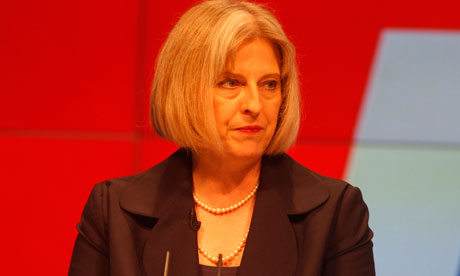
Narrativewatch: learning from Theresa May and the cat

"Facts tell, but stories sell . . . If you're not communicating in stories, you're not communicating.”

James Carville and Paul Begala, US political consultants

Theresa May should know better than to believe reports about the human rights implications of cats

Politicians like to tell stories.  Anecdotes turn abstract concepts and political arguments into credible situations and events that people can understand quickly.  Anecdotes work best when they’re about people.  People relate and react to other people, their highs and lows, their triumphs and their tragedies, their achievements and their failings.  When people act, or when things happen to them, we can feel love, hate, joy, happiness, sadness, pity, longing or resentment. 

In politics, strong anecdotes prove points and prop up prejudices.  So, Ronald Reagan, the master storyteller, told Americans about the scandal of the “welfare queen” from Chicago’s south side.  He told stories about farmers, preachers, people living in small-town America and, as Dan Rather has written, the payoff usually carried a political wallop.  Reagan also told the story of the WWII bomber pilot on a doomed plane who refused to parachute because a wounded young gunner couldn’t evacuate.  OK, the last one came from an old war movie, but Reagan kept on telling it anyway.

Less memorably, Tony Blair sometimes peppered his party conference speeches with brief, oblique anecdotes to show that his government was delivering.

Which brings us to yesterday’s speech to the Conservative Party conference by Theresa May, the home secretary.  She provided an excruciating example of how anecdotes can go badly wrong in politics.   To illustrate the supposed lunacies of the Human Rights Act, a bête noire of Conservative conference goers, Mrs May cited the example of:

"the illegal immigrant who cannot be deported because—and I am not making this up—he had a pet cat."

The trouble was, she had her facts wrong.  The justice secretary, Ken Clarke, all but disowned her claim, in public and on camera.  Then, a spokesman for the judiciary said that the case she referred to involved a Bolivian man whose appeal against deportation was based on a relationship with a British woman of some years' standing. As part of his evidence to a court, he cited his joint ownership of a cat, to demonstrate the seriousness of the relationship.   The basis for the home secretary’s comment appears to have been an immigration judge's light-hearted remark about a cat no longer having to fear adapting to Bolivian mice, which was quickly seized on by right-wing newspapers.

The liberal media has hardly been able to contain its glee, especially as daily coverage of the conference rapidly became dominated by the May – Clarke, er, “catfight”.  [Click here, here, here, here and here.]

The Guardian went in for the kill:

It was an undignified episode. Doubtless some lowly speechwriter has already been handed a glass of whisky and a loaded revolver for embarrassing the home secretary. But it is Mrs May's misjudgement that matters in the end. At the very least, the woman who once bravely coined that phrase about "the nasty party" ought to learn her own lesson. She should be confronting her party's prejudices, not flattering them.

Political differences aside, I suggest there is another, simpler lesson for all politicians and their speechwriters – don’t ever rely on anecdotes unless you can be absolutely certain they are 100% fireproof. 

Ronald Reagan got away with his story about the fictitious fighter pilot, but he lived in a different political culture, in a different time, and had established a conspiracy of fiction with his constituencies.  The UK’s trip- them-up media culture won’t allow top politicians any such leeway. But then, the powerful and those who aspire to lead us should be held to account for the claims they make.

Remember how, in 2000, Gordon Brown, the then chancellor, used Oxford University’s decision to exclude Laura Spence to highlight the bias in the university system against working-class applicants.  He was soon shown not to have been in full possession of the facts.  Later, successive Conservative leaders, Iain Duncan Smith and Michael Howard, both made claims that specific people had been poorly treated by the NHS, only to see the stories fall apart. 

And, right back in 1992, Labour’s general election campaign became bogged down in the war of Jennifer’s Ear -- though that argument was also about the ethics of involving a (named) young girl in a political campaign.

Mrs May is not the first politician to be discover the downside of a faulty anecdote.  I’m sure she won’t be the last.


Posted via email from Neil Stockley's posterous

Narrativewatch: the coalition government tries to woo women


Today, The Guardian’s astute political correspondent, Allegra Stratton, has an interesting article about the coalition’s new attempts to reposition itself with women voters.  The need is clear.  Last month, an Ipsos MORI poll found that men were more dissatisfied than satisfied with the government, by a margin of 21%.  Among women, the figure was 33%. 

But what to do about it?  Allegra Stratton picks up on the distinction between a narrative based mostly on ‘values’ and one based more on ‘policy’ and suggests that the government wants to try a bit of both, but without backtracking on the debt reduction strategy – the heart of its programme.

[There] will be a process of reintroducing the PM to women. In Downing Street they like a story about Bill Clinton reaching out to soccer moms – in this case he banned tobacco advertising next to schools. Tobacco advertising is already banned in the UK but you get the point. One option here is to ban cynical advertising aggressively targeted at children.

Watch out for these and other issues: expect Cameron to criminalise forced marriages sometime soon. That's also why you will hear the prime minister close the conference by talking about something his coalition partners, the Lib Dems, opened their conference with: that gay couples would be able to marry, not just enter civil partnerships. Cameron will remind the country why the policy is important to him, and what social mores are important to him.

Some of his own female MPs think this doesn't cut the mustard and hanker for more substantial overtures. No 10 aides will point out that the theme of the autumn – a clampdown on the something for nothing culture – is something women want. They caution that the debate about scrapping the 50p tax rate must also be seen in the light of how it will play with women – again, badly. "It matters to women that the top 10% are paying a heavy chunk of tax. We have to really underline 'we're all in it together'," one adviser said.

There’s more.  Opinion polls show that women are more downbeat than men about the economy and  focus groups suggest that they are more likely to be worried about cuts in government spending.  The government’s problems with women are more fundamental than the strategists seem to acknowledge.  (For further analysis and comment, click here and here.  But note also this backgrounder from Ipsos MORI.)

Allegra Stratton concludes:

The great face-off between Cameron and women is uncharted politics: a strategy testing heavily the personality and personality of the prime minister himself.

I’d go even further than that.  The government is trying to ‘change the subject’ with women, and invite them to look past its core narrative, that above all, the deficit must be all but wiped out during the life of this parliament. 

I doubt that any government in modern times has pulled off such a political feat.  If his emerging "gender gap" strategy succeeds, David Cameron will be one of the greatest political communicators this country has ever seen.  The coalition’s efforts to woo back women voters provide a narrative case study that is going to be well worth watching.


Posted via email from Neil Stockley's posterous